90-day trial · 3-year warranty · free Express Post. Order before 2pm and it leaves today.
Card, Apple Pay, PayPal or Zip — interest-free with Zip. Orders are placed by phone or email; we send you a secure payment link. Never email your card details.
Clarion Clarity S3
Hear every word again.
Sixteen channels and five listening settings, tuned in an app instead of an appointment.
Australian-owned, held in stock, and dispatched the same day from North Wollongong. Free Express Post
puts most of Australia at 2–4 business days. Sold direct — no clinic in the middle.
No asterisks, no “from” pricing, no phone call to find out the real number. Seven facts, and you
know exactly where you stand.
01
The payment
Paid once. There is no second invoice, and nothing renews.
No subscription, no monthly plan, no fitting fees, no batteries to buy — ever. You buy them, and then you own them.
02
The trial
90 days at home, counted from the day they arrive.
Not from the day you order, and not from the day we post it — the wait never eats into your trial. If they are not right for you, you get the full purchase price back and we pay the return postage.
03
The warranty
3 years. A fault means a brand-new pair.
Not a repair queue — a new pair, with the freight paid in both directions.
04
The wait
Free Express Post, Australia-wide. Order before 2pm and it leaves the same day.
Every pair is held in stock at North Wollongong — nothing is ordered in after you buy. Australia Post puts most addresses at 2–4 business days.
05
The support
Phone and email support after you buy — included.
Stuck on tips, tuning or the app? Call 0485 028 699 or email us and we sort it with you — no appointment, no waiting room, no support fees.
06
The processing
AI-assisted sound. Sixteen channels that read the room, not just amplify it.
The onboard chip splits what you hear into sixteen bands and works on each one separately — lifting speech, holding back the noise behind it, and suppressing feedback before it whistles. Five listening settings, switched in the app.
07
The pedigree
Australian owned. American-engineered and designed sound.
Clarion is an Australian-owned company, and the sound processing inside is engineered and designed in the United States. Both are printed right on the box.
Free Express Post, most of Australia in 2–4 business days · 90-day trial, full refund · 3-year warranty.
Every risk here is ours to carry. The only step left is yours.
02
You are not the only one
Nobody puts off their eyes for ten years.
Glasses took about a fortnight to stop feeling like a big deal. Hearing is different — it goes
quietly, it goes slowly, and admitting it feels like admitting something else. So people wait.
Not weeks. Years.
3.95 million
Australians live with hearing loss — about one in six of us, and the number is climbing.
10 years
is how long people wait, at the far end — seven to ten between first noticing and finally doing something.
50%
of Australians with hearing loss have no hearing aid at all. Not because it wouldn’t help.
24%
higher risk of cognitive impairment was measured in older adults with hearing loss over six years. An association, not proof of cause.
Ten years is a lot of dinners. Your granddaughter only whispers a secret once — and you
smiled through it, and didn’t quite catch it.
Sources. Prevalence: Deloitte Access Economics, Hearing for Life, commissioned by the
Hearing Care Industry Association, 2020 — 3.95 million Australians, 15.3% of the population.
Delay in seeking help: research commissioned by Hearing Australia, widely reported as seven to ten years.
Hearing-aid uptake: Hearing Care Industry Association.
Cognitive decline: Lin et al., JAMA Internal Medicine, 2013 — among 1,984 community-dwelling older
adults followed for six years, those with hearing loss at baseline had a 24% higher risk of incident
cognitive impairment (hazard ratio 1.24, 95% CI 1.05–1.48), and the risk tracked the degree of hearing
loss. In that study “cognitive impairment” means a fall on a screening test, not a dementia diagnosis.
This is an observed association, not causation. The ACHIEVE trial (Lin et al., 2023), which fitted
hearing aids with three years of audiologist support, found no reduction in cognitive decline
across its full group; a 48% slowing appeared only in participants already at higher risk.
Clarion is self-fitted and is not a treatment for dementia, cognitive decline, or any
disease. Figures are for hearing loss generally, not for any one product.
03
30-second check
Is this actually you?
1 · Has someone else asked you to turn the television down?
2 · In a restaurant or a pub, do voices blur into the background noise?
3 · Do you ask people to repeat themselves — or nod along instead?
4 · Does turning the volume up make things louder but not clearer?
This is a plain self-check, not a hearing test or a diagnosis.
If you have sudden loss, pain, discharge, or loss in one ear only, see a doctor first.
04
The part nobody explains
Why louder isn’t clearer.
Five things that make sense of what you’ve been living with. Open any one of them.
01Why your granddaughter is the hardest one at the table to hear+
Women’s and children’s voices sit higher in pitch than a man’s. Age-related hearing loss takes the high notes first — so the low rumble of your mate across the table still comes through, and hers doesn’t.
It is not that she’s quiet, and it is not that you’re not listening. Her voice simply lives in the part of your hearing that went first.
02Why a voice can be loud enough and still make no sense+
Vowels — a, e, o — are low and loud. Consonants — s, f, th, sh, t, k — are high and quiet, and they carry nearly all of the meaning.
Lose the high notes and you still hear that someone spoke. You just can’t tell fifty from sixty, or cat from hat. The sound arrives. The word doesn’t.
03Why turning the telly up doesn’t fix the mumbling+
Volume lifts everything — including the vowels you could already hear perfectly well. The consonants weren’t too quiet. They were missing.
So it gets louder and they still mumble, and now everyone else in the room is uncomfortable. That’s the volume war, and nobody in it is wrong.
04Why one-on-one is fine and a table of six is impossible+
Background noise in a pub or a restaurant is mostly low-pitched — the rumble of a room. It lands right on top of the low sounds you still hear well, and buries what little high detail you had left.
That’s why the quiet lounge room is easy, the Sunday lunch is work, and by dessert you’ve stopped trying.
05Why there was never a day you noticed it start+
The high frequencies go first, and they go slowly — usually evenly, in both ears, over years. There is no morning you wake up and it’s happened.
So you adapt without deciding to. You sit closer. You watch faces. You take the quiet end of the table. By the time it’s obvious to you, the people around you have known for a while.
All five are the same problem: the sounds you’ve lost and the sounds you’ve kept need
different handling, and a volume knob does the same thing to both. That is what sixteen channels are
for — the Clarion splits sound into sixteen separate bands of pitch and sets each one on its own.
The consonants come up. The rumble stays put.
05
The device
Engineered to disappear. Built to reconnect.
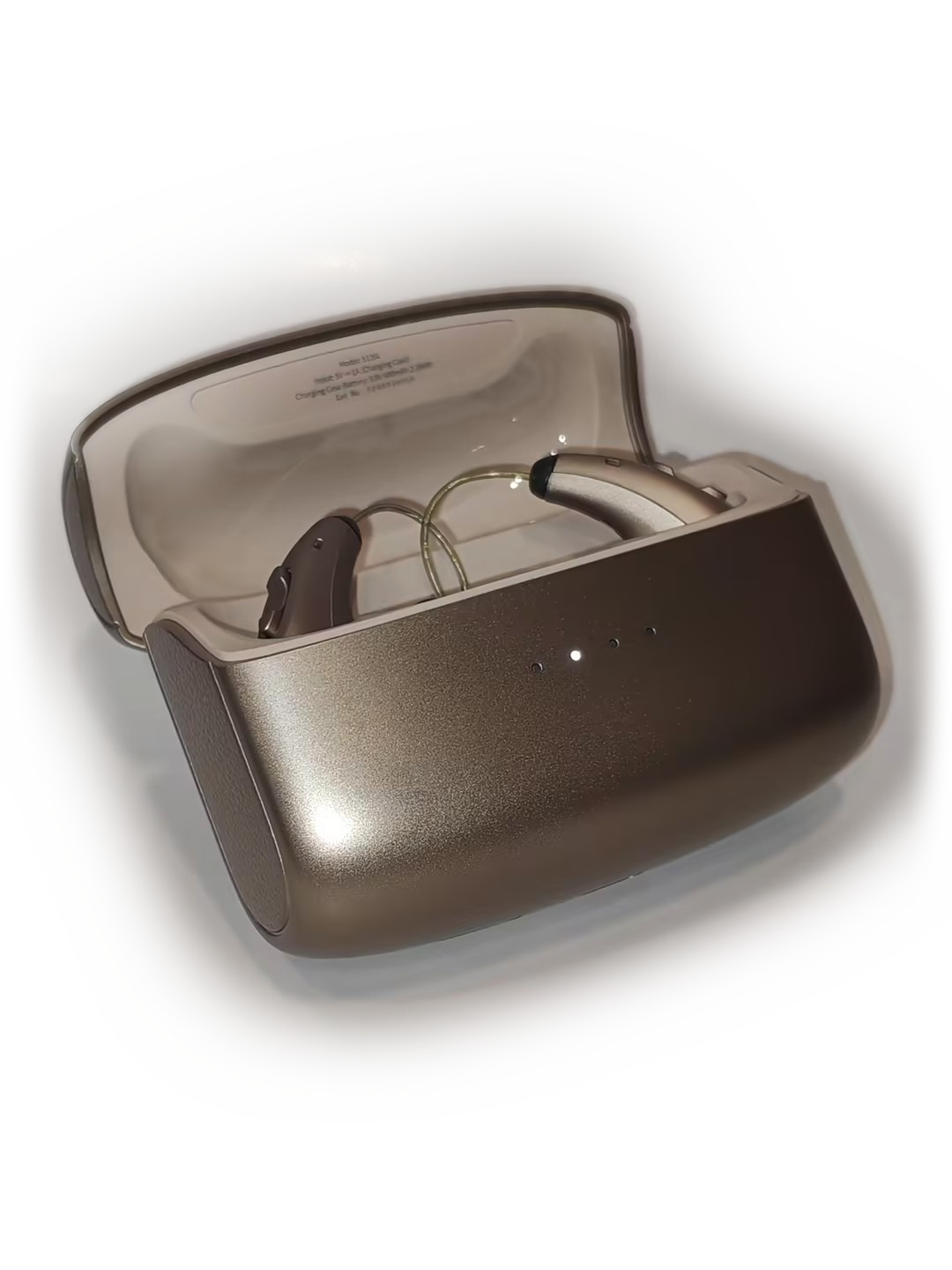
It sits behind your ear with a clear tube into the canal. At the distance people actually stand from
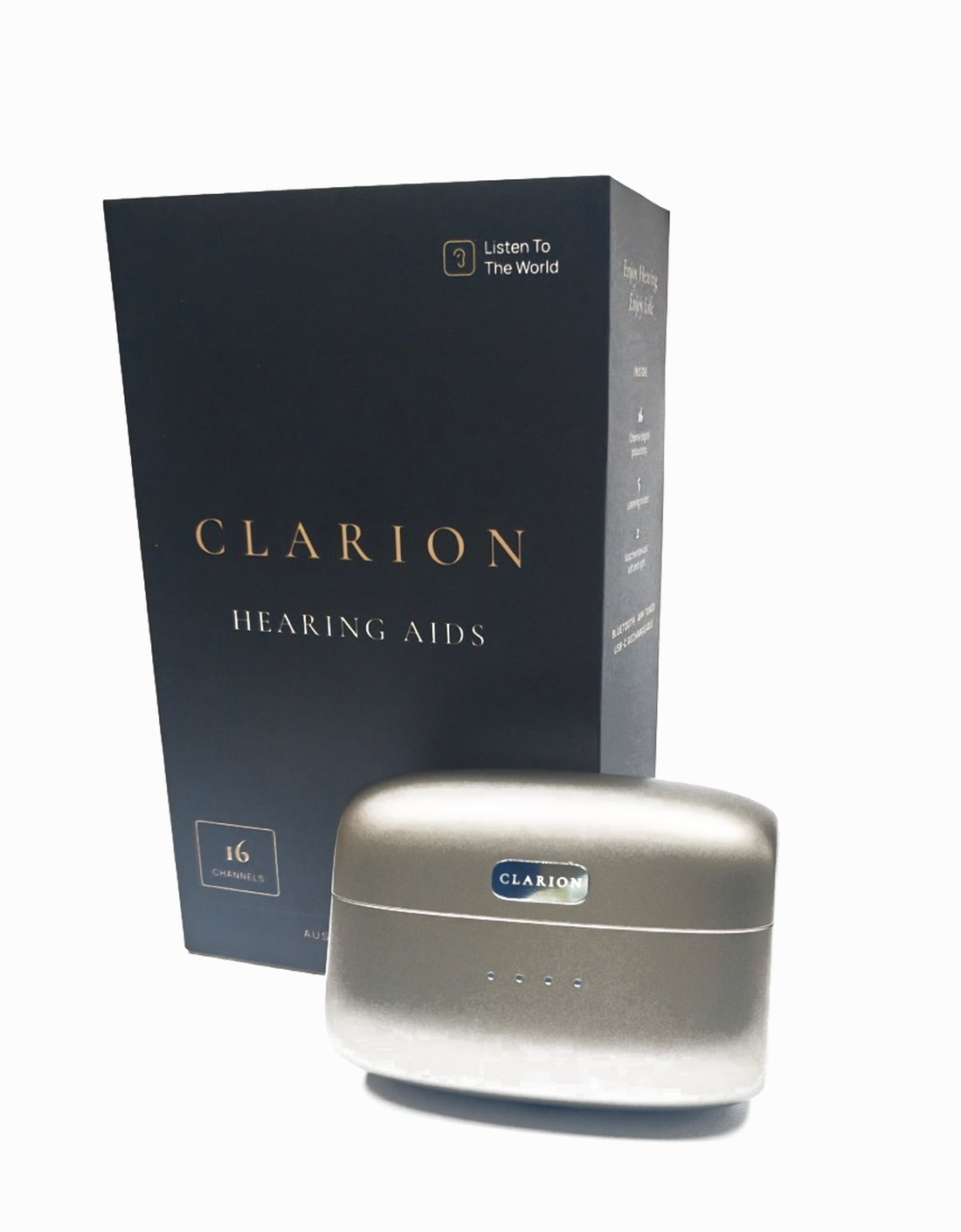
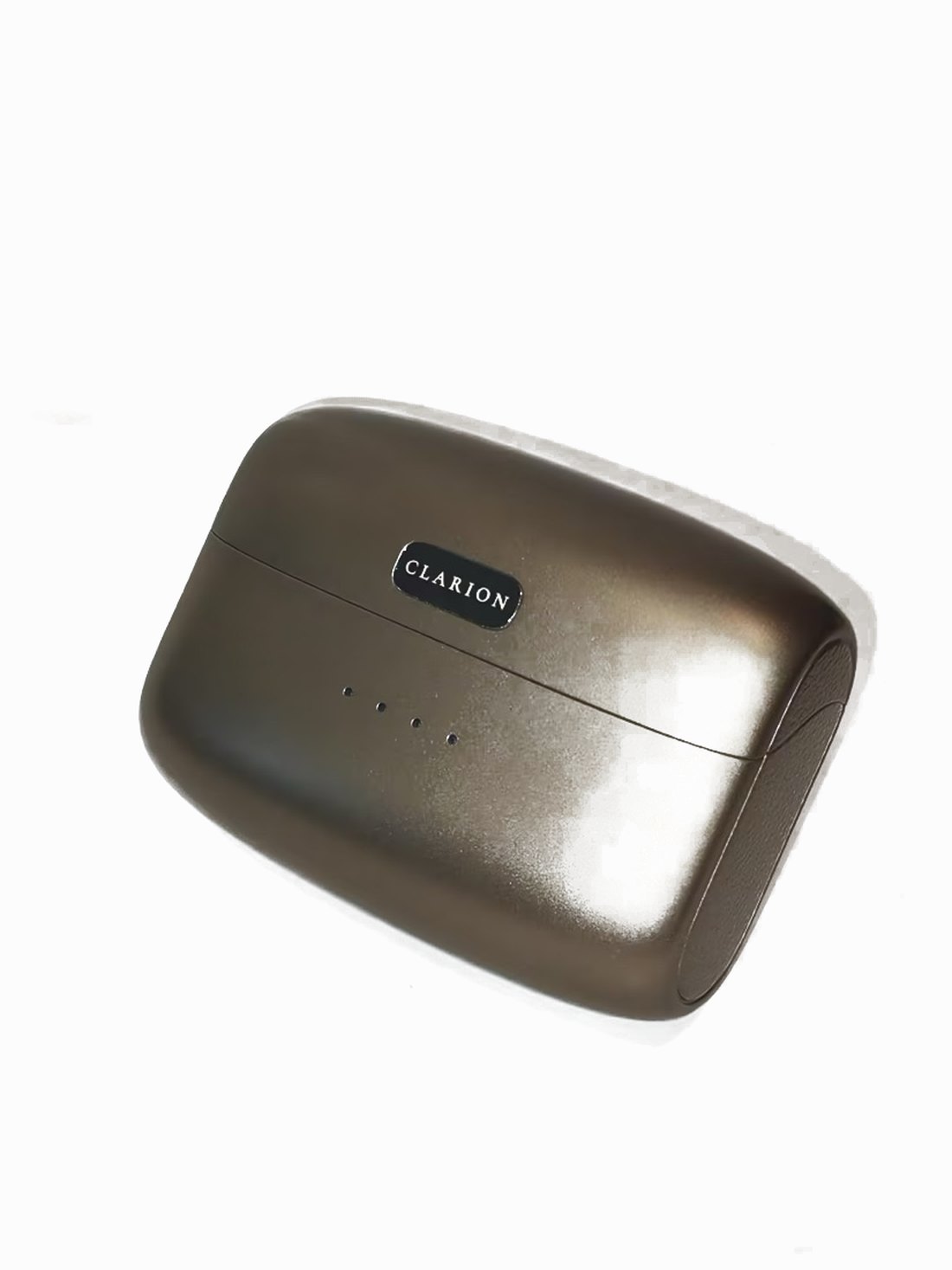
you, there is almost nothing to see. Finished in champagne gold, deliberately low-sheen, to sit quietly against
skin and hair.
Clarion Clarity S3 specifications
Channels
Sixteen — each band of pitch handled on its own
Listening settings
Five — General, Indoor, Outdoor, Tinnitus and Music, switched in the app
Battery
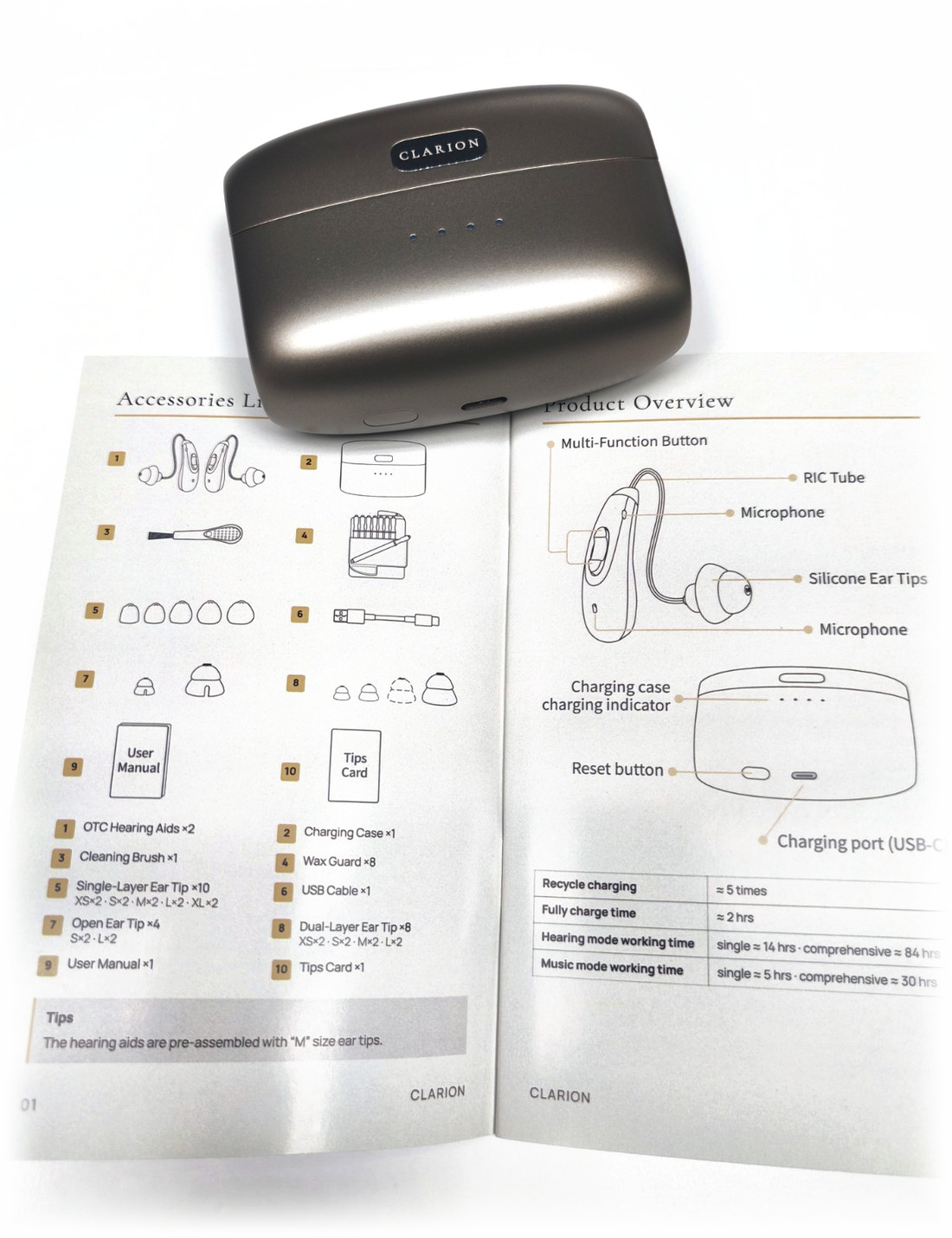
About 14 hours on a charge — 7am to 9pm, covered
With the case
About 84 hours in total before you need a wall socket
Charging
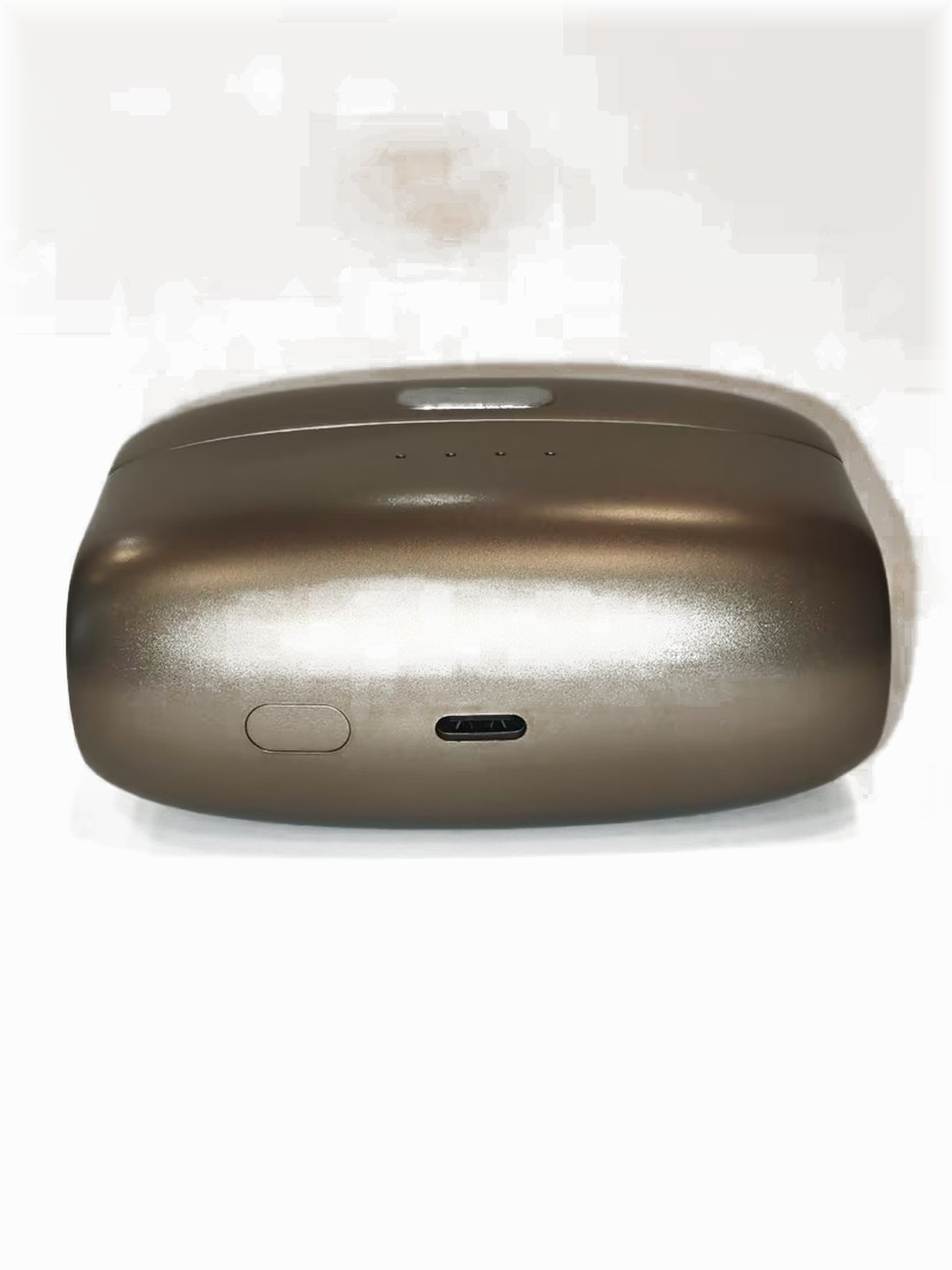
USB-C
Colour
Champagne gold, low-sheen — the colour we supply
Fit
Behind the ear, thin clear tube into the canal
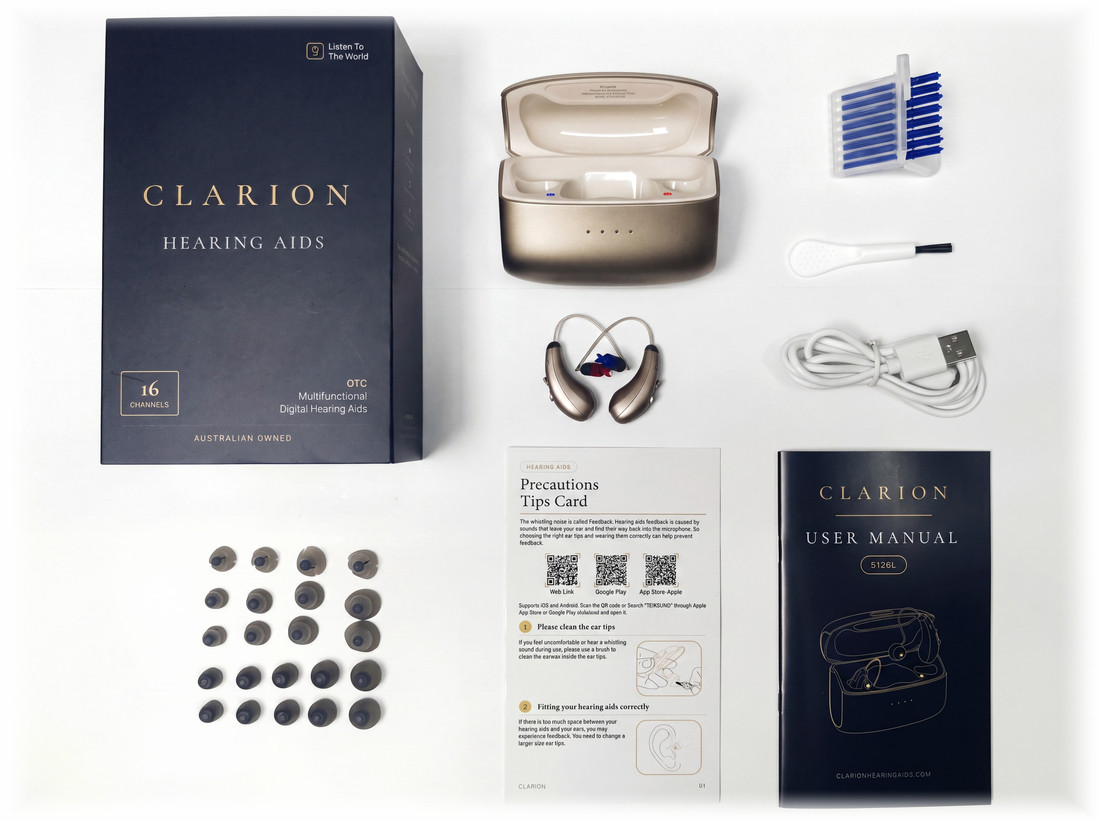
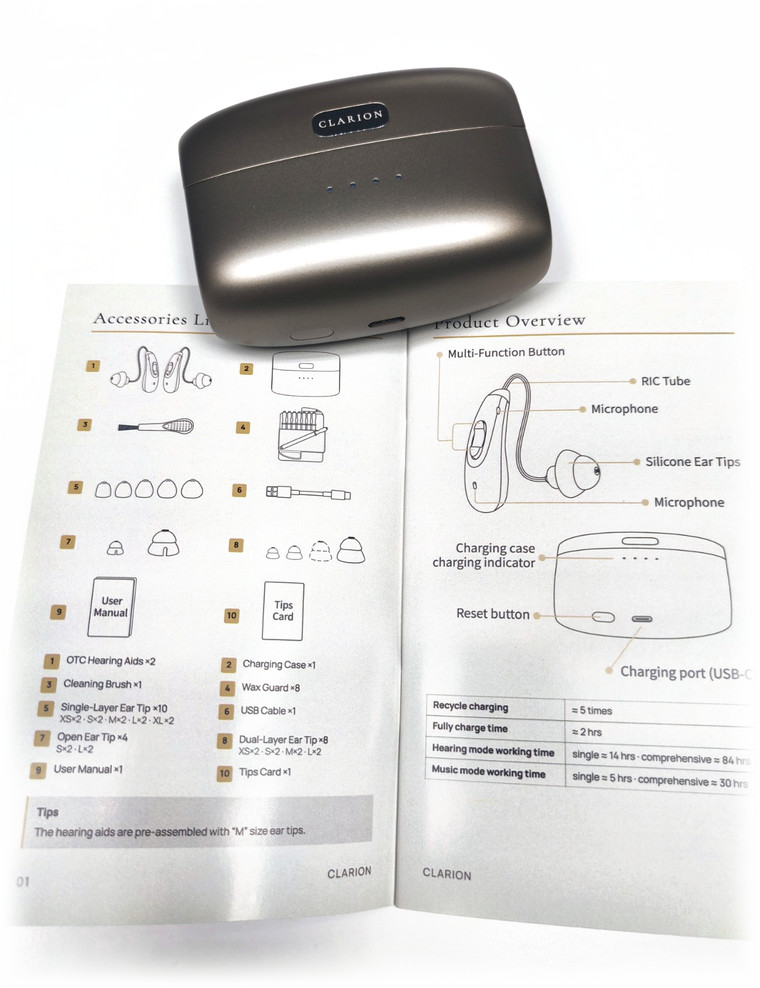
Ear tips in the box
22, in three designs
Wax guards in the box
8 — one lasts about six months
Bluetooth
Calls, streamed audio and the television
Tuning
By ear in the FORSOUND app, or from an audiologist’s report you upload
Conformity marks
FCC · CE · UKCA · RoHS
Made
Australian-owned. Sound engineered and designed in the USA
Trial & warranty
90-day trial from the day it arrives · 3-year warranty
About the Tinnitus setting.
It is one of the five listening settings. In it the aids stop amplifying. It is not a treatment and
it will not remove tinnitus. Tinnitus that is new, sudden, in one ear only, or painful means see a
doctor first.
Wax happens. So does the fix.
Older clinic aids use a bare tube — when wax blocks it you wait for an appointment. These use wax
guards. Pull the old one out, push a new one in, at your kitchen table, in under a minute. Eight are
in the box; when you run out, email us and we post more.
06
The honest price
You’re not paying for better hardware. You’re paying for the showroom.
A clinic price carries the consulting room, the reception desk, the fitting appointments and the
retail margin. Take those out and the hardware costs what the hardware costs.
Traditional clinic compared with the Clarion Clarity S3
Traditional clinic, the pair
Clarion Clarity S3, the pair
Typical price
A$4,000 – A$10,000
A$1,618
What stays with you
—
At least A$2,382. Against the top of the clinic range, A$8,382.
The processing
Multi-channel, clinician-set
The same sixteen-channel processing a clinic fits
Who tunes it
An audiologist, by appointment
You, in the FORSOUND app — or upload your audiologist’s report
Changing it later
Book in, and wait
On your phone, at home, for nothing
Clinic figures are typical Australian market ranges for a pair
including fitting, not quotes — your own quote may differ.
The appointment was the product.
A clinic tunes you once, in a quiet room, on a Tuesday afternoon. Then you go and live the rest of
your life in kitchens, pubs, cars and wind. When it isn’t right — and at first it never quite is —
you ring up, you book, and you wait a fortnight to change a setting.
The Clarity S3 does that work itself. AI-assisted processing reads the room and adjusts across
sixteen channels as the sound arrives — and when you want it different, you change it in the
FORSOUND app, on the spot, for nothing.
That is the whole of the difference. Not lesser hardware — the same sixteen-channel processing a
clinic fits. You are simply not paying for the consulting room, the reception desk, or the second
appointment to undo the first.
And if you already have an audiologist’s report, bring it — the app will work to it. A
clinician still does the part only a clinician can do. You just stop paying rent on the waiting room.
07
The moments worth hearing
What it is actually for.
A story at bedtime, a coffee with a friend, a phone call, a dance
at a wedding. Not the device — the reason for it.
08
An honest comparison
Where Clarion actually sits.
Against a clinic fitting on one side and a chemist amplifier on the other.
Chemist amplifier, Clarion Clarity S3 and a clinic fitting compared
Chemist amplifier
Clarion Clarity S3
Clinic fitting
Typical price
A$100 – A$400
A$1,618 the pair
A$4,000 – A$10,000
What it does to sound
Makes everything louder
16 channels — lifts what you’ve lost
Multi-channel, clinician-set
Listening settings
Usually one
Five, incl. Tinnitus & Music
Several, set at fitting
Who tunes it
Nobody
You, in the app — or upload your audiologist’s report
An audiologist, by appointment
Changing the tuning later
Not possible
On your phone, at home
Book in, and wait
Blocked by wax
Often — no guard
Swap a guard yourself, under a minute
Depends on the model
Bluetooth calls & TV
Rarely
Yes
On higher tiers
Rechargeable
Usually disposable batteries
USB-C · about 14h, ~84h with the case
Usually
Trial
Store returns policy
90-day trial
Varies by clinic
Warranty
Often 12 months
3-year warranty
Typically 2–3 years
Clinic and chemist figures are typical Australian market ranges,
not quotes for a specific product.
09
The FORSOUND app
Already have an audiologist’s report? Upload it.
If you’ve had a hearing test, you already own the measurements a clinic would charge you to act on.
Upload that report and the app tunes the aids to it straight away — your exact measured loss, dialled
in over a cup of tea instead of another appointment.
Search FORSOUND in the Apple App Store or Google Play. That’s the name to type.
Volume on the device itself, or from your phone
Switch between all five listening settings
Bluetooth — take calls through them, stream audio, connect the television
Keeps adapting as it learns how you hear
10
The manual
Read it before you buy — ask and we send it.
All 28 pages, exactly as they arrive in the box. How to fit them, how to change a wax guard, what
every setting does, what the warnings say.
Most companies make you buy first and read later. If something in it would put you off, we would
rather you knew now. Ask and we send it — before you spend a cent.
It’s intended for adults with perceived mild to moderate hearing difficulty. Sixteen channels tuned in the app means it lifts the specific frequencies you’ve lost rather than making everything louder. If you have sudden loss, pain, discharge, or loss in only one ear, see a doctor first — that needs looking at, not a device.
How can A$1,618 match a clinic fitting?
Multi-channel digital processing and app tuning, sold direct instead of through a clinic — so you’re not paying for fitting appointments and retail margin. The saving is in the distribution, not in cutting the hardware down.
What if I’ve never had a hearing test?
You don’t need one to start. Tune them by ear in the app and it keeps adapting. If you do have an audiologist’s report, upload it and it tunes straight to your measured loss.
How long does the battery really last?
About 14 hours of hearing on a single charge, and roughly 84 hours in total once you count the recharges the case carries. A full waking day, and about a week of ordinary use between wall sockets. It charges over USB-C.
Can people see them?
They sit behind the ear with a thin clear tube into the canal — very little to see from the front or side. The champagne gold finish is deliberately low-sheen so it doesn’t catch the light.
What happens when they block with wax?
You change the wax guard yourself — old one out, new one in, under a minute. Eight are in the box and one lasts about six months. When you run out, email us and we post more. No appointment.
What does the Tinnitus setting do?
It is one of the five listening settings. In it the aids stop amplifying.
It is not a treatment and it will not remove tinnitus. Tinnitus that is new, sudden, in one ear only, or painful means see a doctor first.
Is it TGA approved?
The hardware carries FCC, CE, UKCA and RoHS conformity marks — those are the independent marks it holds. We don’t claim a TGA approval or an ARTG entry. The Therapeutic Goods Administration is Australia’s authority for therapeutic goods and the Australian Register of Therapeutic Goods is public, so you can check the status of any product yourself.
How long does delivery take?
Australia, yes — order before 2pm and it leaves North Wollongong the same day on Express Post, and most addresses see it in 2–4 business days. Shipping is included and there is nothing further to pay.
New Zealand we can send, but customs charges GST and an import fee on arrival and those are billed to you, not to us. Email us before you order and we will walk you through it.
What colour are they?
Champagne gold — a soft, low-sheen tone chosen to sit quietly against skin and hair rather than catch the light. That is the colour we supply.
What if I don’t get on with them?
Send them back inside 90 days — counted from the day they arrive, not the day you order. Give them a fair go first: ears genuinely take a couple of weeks to adjust to hearing detail again.
12
Rejoin the conversation
Hear every word again — tonight.
A$1,618 the pair, shipping included, and 90 days from the day it lands to change your mind.
Stop asking people to repeat themselves.